
Hot Melt Extrusion
Hot Melt Extrusion (HME) is one of the leading core technologies in the pharmaceutical industry for addressing the formulation development challenges of poorly soluble drugs. By dispersing the API at the molecular level within a polymer matrix, HME generates amorphous solid dispersions (ASDs) that effectively enhance drug dissolution and improve bioavailability.
ChemExpress’ HME platform covers the full development continuum from gram-scale formulation exploration to hundred-kilogram-scale commercial manufacturing, combining solvent-free continuous processing with deep formulation expertise to deliver comprehensive solutions.
Our Capability
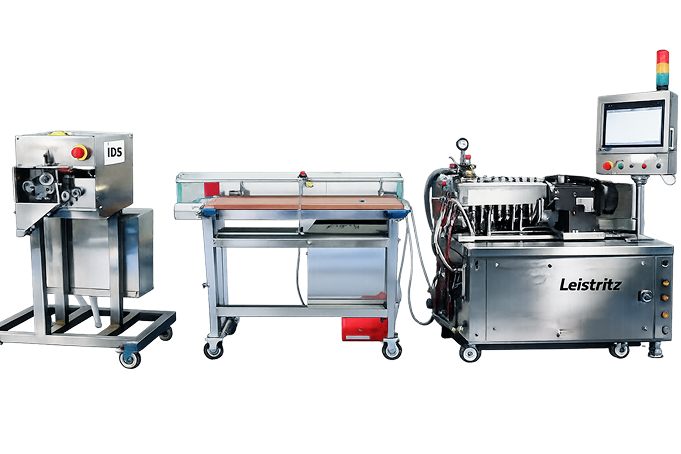
ChemExpress' HME platform is equipped with gram-scale laboratory equipment to support early-stage formulation development and proof-of-concept/feasibility studies, as well as 2 pilot-to-commercial-scale production equipment capable of supporting clinical trial manufacturing and commercial-scale production.
- Leistritz ZSE12HPPH-40D: up to 5kg/h
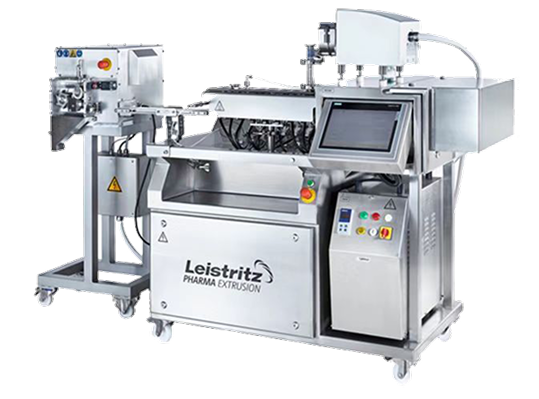
- Leistritz ZSE18 HP-VA-40D: up to 10kg/h
Why Partner with ChemExpress
Extensive Project Experience
ChemExpress has extensive project experience from early development to manufacturing, enabling comprehensive evaluation of molecular melting point, thermal stability, and process suitability
Professional Equipment
Advanced Leistritz equipment enables one-stop development from Pre-IND through Phase III, supporting key stages of drug development

Uncompromising Compliance & Quality Assurance
Successful filings in China, the US, and the EU, with proven experience in passing EU QP audits and meeting international standards
Case Study
Conversion of Spray Drying Process to HME Process
Background: Project A involves a poorly soluble drug. The client’s spray-dried ASD formulation has completed Phase IIa. To lower commercial production costs, the client entrusted us to convert the existing process to Hot Melt Extrusion (HME) while retaining clinical efficacy.
Achievement: We successfully completed the process conversion to HME. The new process fully maintains the original efficacy, supports subsequent clinical development, and substantially cuts overall production costs.
FAQs
HME is primarily suited for BCS Class II and Class IV poorly soluble compounds, particularly those with low solubility and high dose requirements. It is also applicable to formulations with controlled release needs.
A solid dispersion can change the crystalline form of a drug to an amorphous form. The amorphous drug is in a high energy state and does not need to overcome the lattice energy when dissolving, so the dissolution rate is faster. The polymer carrier can inhibit the crystallization of the drug, maintain the supersaturation state of the drug, and prevent the drug from recrystallizing during dissolution.
The solubility enhancing effect for solid dispersions depends on the specific molecular properties and can typically range from several times to several dozen times of the original solubility of the crystalline drug.
Examples of the technologies include micronization (jet milling) and various types of amorphous solid dispersions (spray drying, hot-melt extrusion, fluidized bed coating, freeze-drying, and micro precipitated bulk powder [MBP])


