

Beyond Single-Target ADCs: How Multispecific and Dual-Payload Designs Are Shaping Next-Generation Antibody–Drug Conjugates
Beyond Single-Target ADCs: How Multispecific and Dual-Payload Designs Are Shaping Next-Generation Antibody–Drug Conjugates
Executive Summary
Antibody–drug conjugates (ADCs) are evolving beyond conventional single-target, single-payload architectures. Multispecific ADCs seek to refine how therapeutic payloads are delivered through recognition of multiple antigens or epitopes, whereas multipayload ADCs combine distinct pharmacological mechanisms within a single conjugate. Both approaches aim to address tumor heterogeneity, acquired resistance and therapeutic limitations, but molecular complexity alone does not establish superior clinical outcomes.
According to the May 2026 Beacon Intelligence snapshot, 1,926 of approximately 2,600 tracked ADC assets (74%) were traditional ADCs and 674 (26%) were classified as novel ADCs. The database tracked 378 multispecific ADC assets and 131 multipayload ADC assets. These categories can overlap and should not be added together. The decisive question is whether differentiated designs can demonstrate meaningful clinical benefit while maintaining controllable product quality and scalable manufacturability. [1]
At a Glance
| Metric | May 2026 Beacon snapshot |
|---|---|
| Traditional / novel ADC assets | 1,926 (74%) / 674 (26%) |
| Multispecific ADC assets | 378; 368 bispecific and 10 trispecific |
| Multipayload ADC assets | 131; 130 dual-payload and 1 triple-payload |
| Multipayload maturity | Approximately 95% preclinical |
1. How Is ADC Innovation Moving Beyond Single-Target, Single-Payload Designs?
Conventional ADCs typically comprise a monoclonal antibody directed against one antigen, a chemical linker and one therapeutic payload. Antigen binding, internalization and intracellular payload release enable targeted cytotoxicity. Current innovation extends beyond incremental improvements in these components to new recognition architectures, combinations of payload mechanisms and molecular functions.
The two design directions address different questions. Multispecific ADCs explore where and under what conditions a payload is delivered; multipayload ADCs explore which combination of therapeutic mechanisms is delivered. Related modalities, including antibody–oligonucleotide conjugates (AOCs) and degrader–antibody conjugates (DACs), further expand the targeted-delivery landscape. [1]
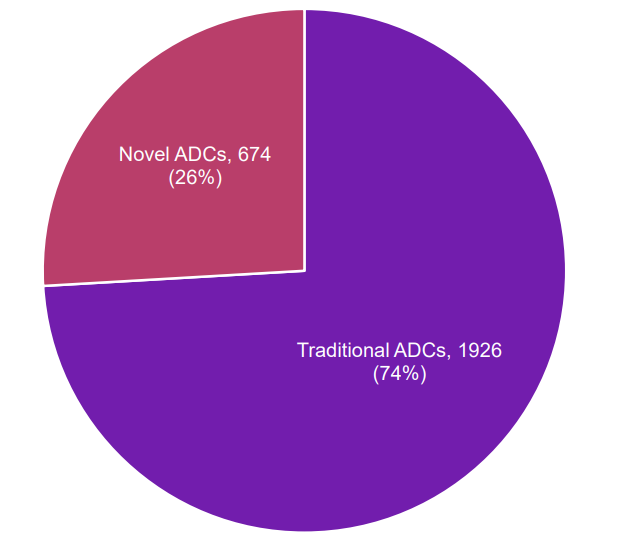
Figure 1. Traditional versus novel ADC assets.
2. What Can Multispecific ADCs Add to Targeted Drug Delivery?
2.1 Bispecific ADCs dominate the landscape
Multispecific ADCs recognize two or more distinct antigens or epitopes. Among the 378 tracked assets, 368 were bispecific ADCs (97.4%) and 10 were trispecific ADCs (2.6%). Of the bispecific programs, 226 were classified as active preclinical and 51 as active clinical in the May 2026 snapshot; trispecific development remained predominantly preclinical. Approximately 75% of multispecific programs were associated with solid tumors, particularly lung, gastrointestinal and breast cancers. These counts reflect Beacon’s defined database scope and snapshot date. [1]
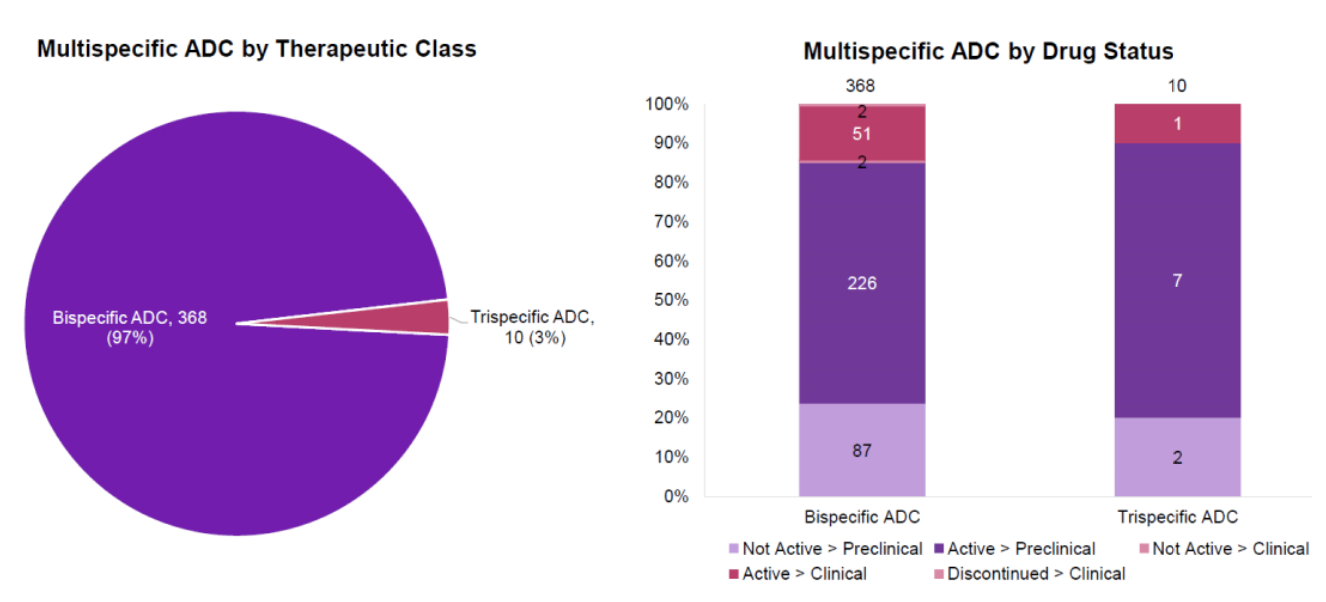
Figure 2. Multispecific ADC formats and development status.
2.2 Why might dual recognition matter?
First, dual-antigen or dual-epitope recognition may help address spatial and temporal heterogeneity in antigen expression, potentially expanding coverage of heterogeneous tumor-cell populations. Second, selected architectures may enhance receptor engagement or internalization through co-binding, affinity tuning or altered trafficking. Third, appropriately engineered co-expression-dependent recognition may improve discrimination between malignant and healthy tissues. These are design-dependent hypotheses rather than universal properties of bispecific ADCs.
Target co-expression, binding geometry, internalization routes and normal-tissue antigen expression all influence efficacy and safety. Additional target recognition does not, by itself, guarantee an improved therapeutic index.
2.3 What does clinical translation look like?
Izalontamab brengitecan (BL-B01D1; iza-bren) is an EGFR×HER3 bispecific ADC carrying a topoisomerase I inhibitor payload. On June 22, 2026, it was approved in China for recurrent or metastatic nasopharyngeal carcinoma progressing after platinum-containing chemotherapy and PD-1/PD-L1 inhibitor treatment, marking an important clinical milestone for bispecific ADCs.
Results reported in 2026 from the phase III PANKU-Lung01 study in EGFR-mutated advanced nonsquamous non-small cell lung cancer following third-generation EGFR-TKI treatment showed median progression-free survival of 11.1 months with iza-bren versus 5.7 months with comparator chemotherapy (hazard ratio, 0.40). Grade ≥3 treatment-related adverse events were reported in 79% versus 62%, respectively. These findings support further evaluation of the benefit–risk balance; the lung-cancer study population must not be confused with the approved nasopharyngeal-cancer indication. [9]
2.4 Which target combinations are being investigated?
In the Beacon snapshot, prominent bispecific pairings included c-MET×EGFR (29 assets), EGFR×HER3 (15), HER2×HER2 biparatopic formats (12) and Nectin-4×TROP2 (9). Some approaches combine different receptors, whereas others recognize separate epitopes on the same receptor. The key development benchmark is not target-pair novelty alone but demonstrable differentiation from established single-target ADCs. [1]
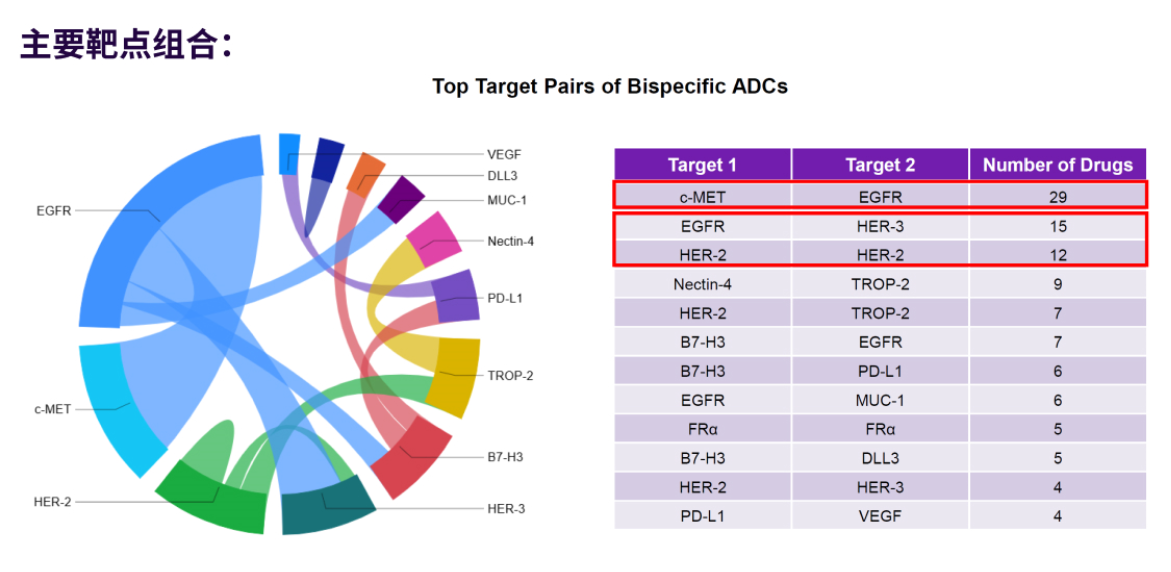
Figure 3. Leading bispecific ADC target pairs.
3. Can Dual-Payload ADCs Help Overcome Drug Resistance?
3.1 A promising concept at an early stage
Multipayload ADCs incorporate at least two therapeutic payloads within the same antibody conjugate. Their rationale is to combine complementary mechanisms of action rather than simply increase payload quantity. Beacon tracked 131 multipayload assets in May 2026: 130 dual-payload and one triple-payload design. Approximately 95% were preclinical, underscoring the field’s early maturity. Single-target dual-payload programs frequently focus on established targets such as HER2 and TROP2, although dual-targeting/multipayload combinations are also under investigation. [1]
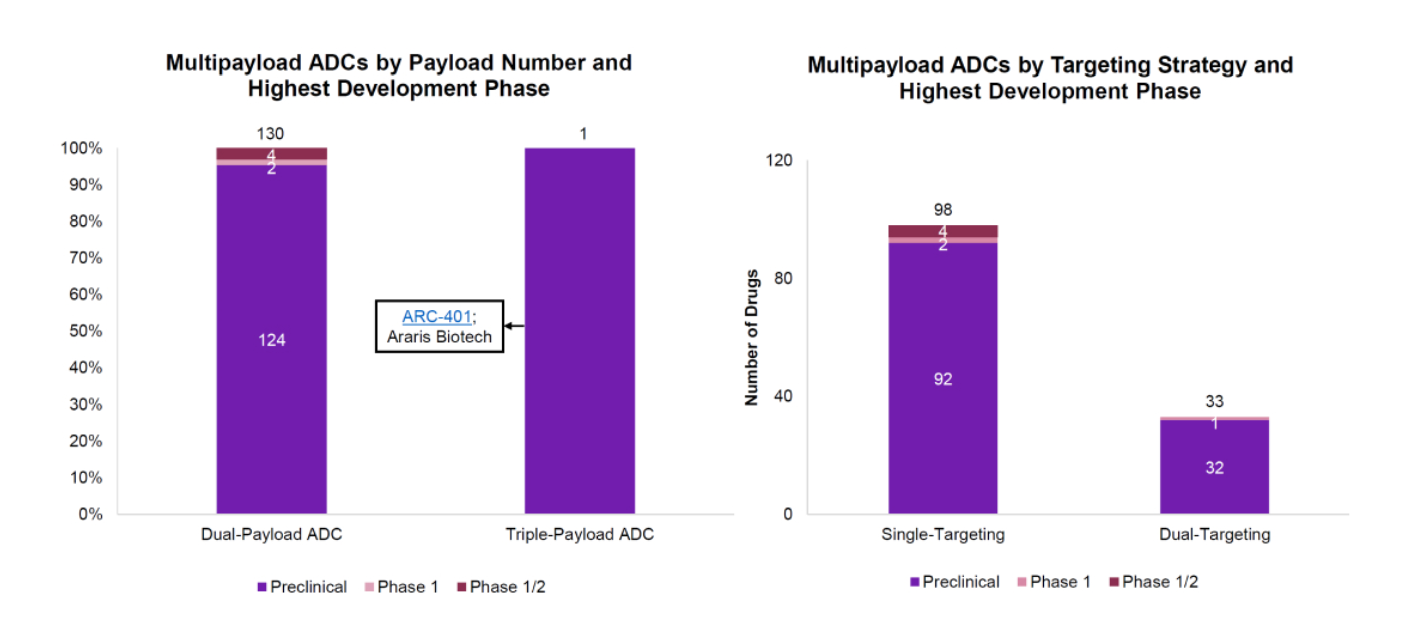
Figure 4. Multipayload ADCs by payload number and development phase.
3.2 What combinations are under investigation?
| Payload combination | Scientific rationale | Principal development questions |
|---|---|---|
| Topo-I inhibitor + tubulin inhibitor | Complementary cytotoxic mechanisms | Cross-resistance; overlapping toxicity |
| Cytotoxic payload + DNA damage response (DDR) inhibitor | Pair DNA damage with impaired repair | Release kinetics; intracellular exposure |
| Cytotoxic payload + immune agonist | Combine direct tumor killing with immune activation | Immune-mediated toxicity; payload ratio |
The Beacon dataset identified topoisomerase I inhibitor plus tubulin inhibitor as a leading disclosed dual-payload combination (28 assets). Other approaches include cytotoxic agents paired with immunomodulators or pathway inhibitors. Pharmacological complementarity remains a hypothesis requiring rigorous preclinical and clinical validation; it should not be equated with demonstrated synergy. [1,3–5]
3.3 Which multipayload ADCs have entered clinical development?
KH815 is a TROP2-directed dual-payload ADC combining a topoisomerase I inhibitor with an RNA polymerase II inhibitor and is associated with a phase I trial (NCT06885645). IBI3020, a CEACAM5-directed dual-payload ADC, is in phase I evaluation for safety, tolerability, dose selection and preliminary antitumor activity (NCT06963281). HMBD-802, also referred to as CLIO-8221 in the Chinese article, is a HER2-directed dual-payload program exploring a topoisomerase I inhibitor and an ATR inhibitor; the Beacon report lists its phase I/II study (NCT07300943). [1]
These examples demonstrate progression into human testing, not a class-wide advantage over single-payload ADCs or combination regimens. Comparative efficacy, resistance control and tolerability remain open questions.
4. What CMC Challenges Do Complex ADC Architectures Create?
Multispecific ADCs introduce challenges related to antibody architecture and its compatibility with conjugation chemistry. Multipayload ADCs add complexity in linker–payload selection, payload-ratio control, molecular heterogeneity and analytical characterization. These issues should be addressed during early developability assessment rather than deferred until process scale-up.
| Development area | Multispecific ADCs | Multipayload ADCs |
|---|---|---|
| Antibody engineering | Domain assembly, mispairing control, stability | Conjugation-site selection, payload capacity |
| Linker–payload | Compatibility with complex antibody architecture | Chemical compatibility, release behavior, payload ratio |
| Bioconjugation | Binding integrity, internalization, structural integrity | Orthogonal conjugation, payload-specific DAR |
| Analytics | Structural heterogeneity, aggregation, binding activity | Payload distributions, DAR combinations, free payload |
| Scale-up | Antibody stability, robust conjugation/purification | Multistep conjugation, yield, batch consistency |
4.1 Why is average DAR insufficient for dual-payload ADCs?
For conventional ADCs, critical attributes often include average drug-to-antibody ratio (DAR), DAR distribution, free payload and process-related impurities. For dual-payload ADCs, a single total DAR does not adequately describe product composition: two batches with the same average total DAR may differ in payload A-to-B ratio and molecular payload combinations, potentially affecting pharmacokinetics, stability, efficacy and safety.
A more informative control strategy should consider payload-specific DAR, payload ratios and joint distributions, residual free payloads, incompletely conjugated species, release profiles and batch-to-batch reproducibility. Orthogonal or sequential conjugation strategies may also increase purification and scale-up demands. [3–5]
4.2 Why should manufacturability be evaluated early?
Antibody structure and conjugation-site accessibility can affect stability and reaction efficiency; linker–payload physicochemical properties can influence reaction conditions, purification recovery and formulation stability. Distinct release kinetics may alter pharmacological behavior. Early programs therefore need to align intended molecular function with critical quality attributes (CQAs), analytical methods, process robustness and eventual GMP manufacturing requirements.
5. Industry Outlook: Clinical Differentiation Must Be Matched by Manufacturability
Multispecific ADCs have achieved meaningful clinical translation, while multipayload ADCs are beginning to establish clinical proof of concept. Nevertheless, pipeline expansion should not be interpreted as confirmation of therapeutic superiority. The next stage of innovation will be defined by reproducible clinical benefit, acceptable safety and the ability to manufacture complex conjugates consistently at scale.
As molecular architectures become more sophisticated, integrated linker–payload development, bioconjugation, analytical characterization, CMC process development and GMP manufacturing will become increasingly important. Through its integrated ADC/XDC CRDMO platform, ChemExpress continues to develop capabilities spanning linker–payload chemistry, conjugation, analytical development and GMP manufacturing to support the progression of conjugate programs from research toward clinical development and commercialization.
Frequently Asked Questions
Are multispecific ADCs and dual-payload ADCs the same?
No. Multispecific describes recognition of multiple antigens or epitopes; dual-payload describes incorporation of two therapeutic payloads. One ADC can potentially incorporate both design features.
Does a bispecific ADC necessarily have better tumor selectivity?
No. Selectivity depends on antigen-expression patterns, binding geometry, affinity, trafficking and healthy-tissue exposure. Dual recognition is a design opportunity, not a guarantee of improved safety.
What makes dual-payload ADC manufacturing different?
Beyond total DAR, developers must characterize payload-specific loading, A/B ratios, joint payload distributions and potentially distinct release and stability behaviors. These increase analytical and process-control requirements.
What evidence is needed to establish clinical differentiation?
Evidence should demonstrate clinically meaningful benefit–risk improvement against appropriate standard-of-care or relevant comparator regimens, rather than relying on mechanistic rationale or preclinical synergy alone.
References and Data Sources
[1] Beacon Intelligence. Advances in ADCs: Multispecific and Multipayload Landscapes. WADC South Korea 2026; data as of May 2026; presentation dated June 10, 2026.
[2] Tsuchikama K, et al. Exploring the next generation of antibody–drug conjugates. Nature Reviews Clinical Oncology. 2024;21:203–223.
[3] Journeaux T, Bernardes GJL. Homogeneous multi-payload antibody–drug conjugates. Nature Chemistry. 2024;16:854–870.
[4] Tao J, et al. Dual-payload antibody–drug conjugates: Taking a dual shot. European Journal of Medicinal Chemistry. 2025;281:116995.
[5] Homogeneous antibody-drug conjugates with dual payloads: potential, methods and considerations. mAbs. 2025;17(1):2498162.
[6] Mullard A. Dual-payload ADCs move into first oncology clinical trials. Nature Reviews Drug Discovery. 2025;24:573–576.
[7] Clinical Pharmacology and Translational Science Considerations in the Development of Dual-Payload Antibody Drug Conjugates. 2026.
[8] Zhao Y, et al. Izalontamab Brengitecan in Extensive-Stage Small Cell Lung Cancer: Results From a Phase Ib Study. Journal of Clinical Oncology. 2026.
[9] PANKU-Lung01 Phase III study. ESMO 2026; The ASCO Post, November 6, 2026.
[10] Xia G, et al. CAN016, a HER2-targeted dual-payload ADC. Cancer Research. 2026;86(8 Suppl):CT292.
Tags:
Next-Generation ADCsMultispecific ADCsMultipayload ADCsBispecific ADCsDual-Payload ADCsADC CMC DevelopmentADC ManufacturingADC/XDC CRDMO