

The Rise of Site-Specific ADCs: Trends and Innovations
Although most approved ADCs are non-site-specific, site-specific conjugation technology has become the preferred strategy for developing ADCs. As this field evolves, the proportion of site-specific conjugated ADCs in the R&D pipeline is growing rapidly. Site-specific conjugation technology is gradually becoming the core driving force for innovation in the ADC field. Based on the latest pipeline data, several key trends are emerging:
1. Site‑specific conjugation is rapidly penetrating clinical pipelines
total of 1,846 ADCs were included in this analysis, including traditional ADCs, antibody-fragment-drug conjugates, antibody-oligonucleotide conjugates, bispecific ADCs, degrader antibody conjugates, and dual-payload ADCs. Overall, most site-specific information remains undisclosed, among the 576 ADCs with available information, the rise of site-specific conjugation is clearly evident.
● Site‑specific conjugation has entered the application stage: As of 2024, three site‑specific ADCs have been approved. This indicates that the site-specific conjugation technology is well-established and has been clinically validated by regulatory authorities.
● Site‑specific conjugation has emerged as the dominant approach: Among ADCs with disclosed conjugation methods, 445 drugs identified as site-specific (77%) and 131 drugs as non-site-specific (23%) (Fig 1).
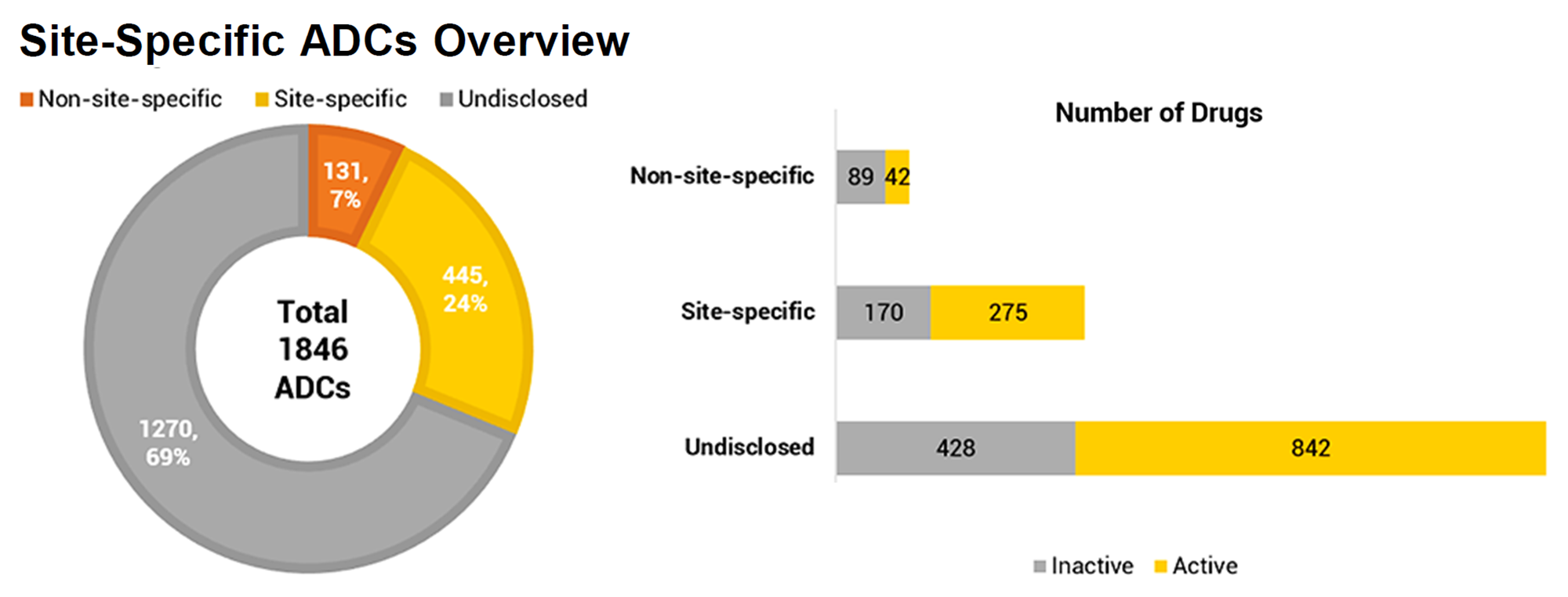
Fig 1 Site-Specific ADCs Overview
● Clinical activity comparison:Among site-specific drugs, 61% are actively studied either preclinically or clinically, whereas only 32% of non-site-specific drugs are active (Fig 1).
● Continuous expansion of site‑specific pipelines:The first site-specific conjugated ADC entered the clinic back in 2010, and since then, we have seen site-specific ADCs progress to the clinic every year, with a record of 28 drugs in 2024 (Fig 2).
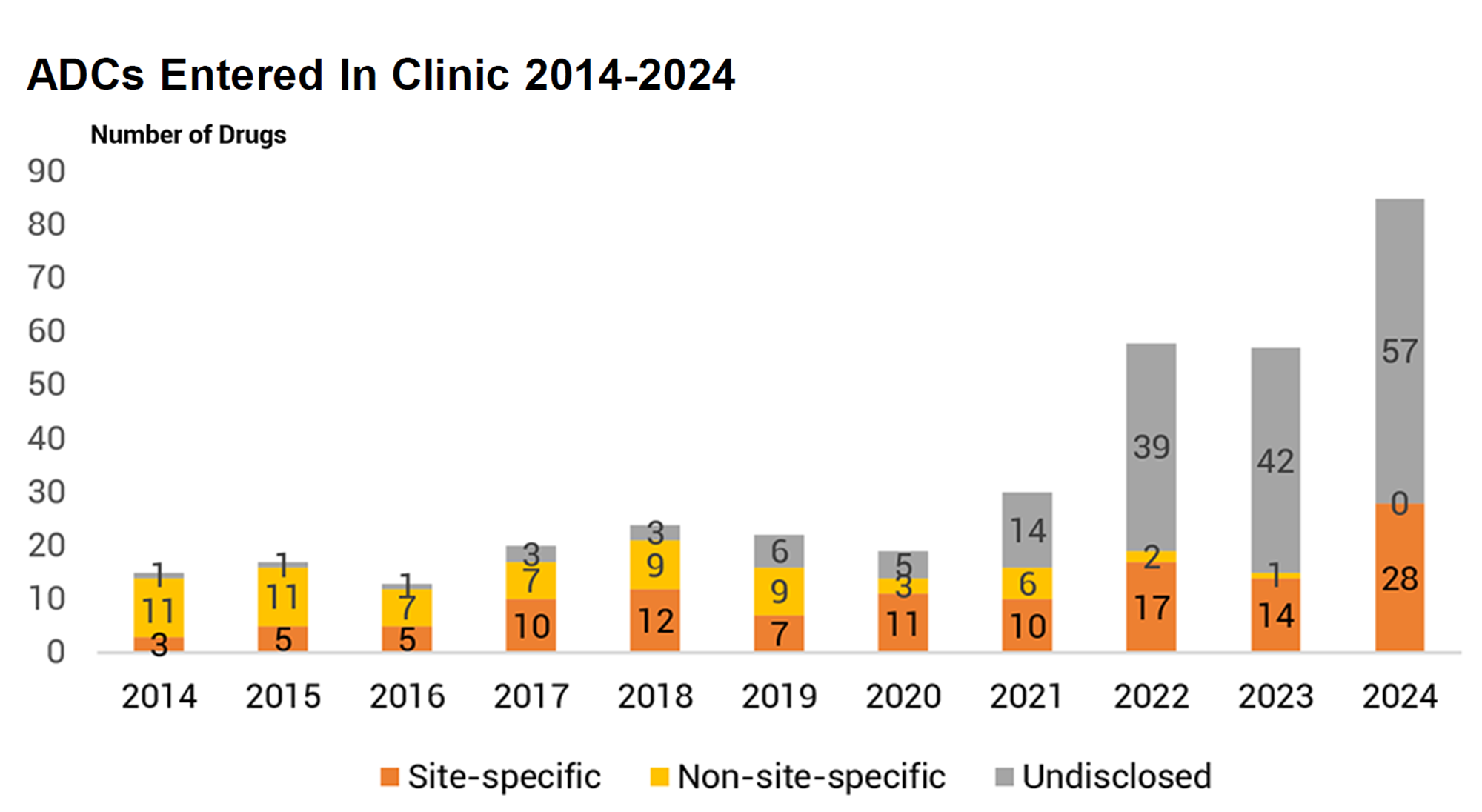
Fig 2 ADCs Entered In Clinic 2014-2024
● The inflection point in conjugation technology: Additionally, 2024 is the first time we have seen no disclosed non-site-specific ADCs enter the clinic, underscoring a clear trend that future ADC R&D and regulatory approvals will likely prioritize site‑specific conjugation (Fig 2).
2. Payload and Linker Trends in Site-Specific ADC
A. Site-Specific ADC
● MMAE is by far the most popular payload conjugated for site-specific ADCs in disclosed pipelines. 16 drugs are active in the clinic while 12 are investigated in preclinical studies (Fig 3).
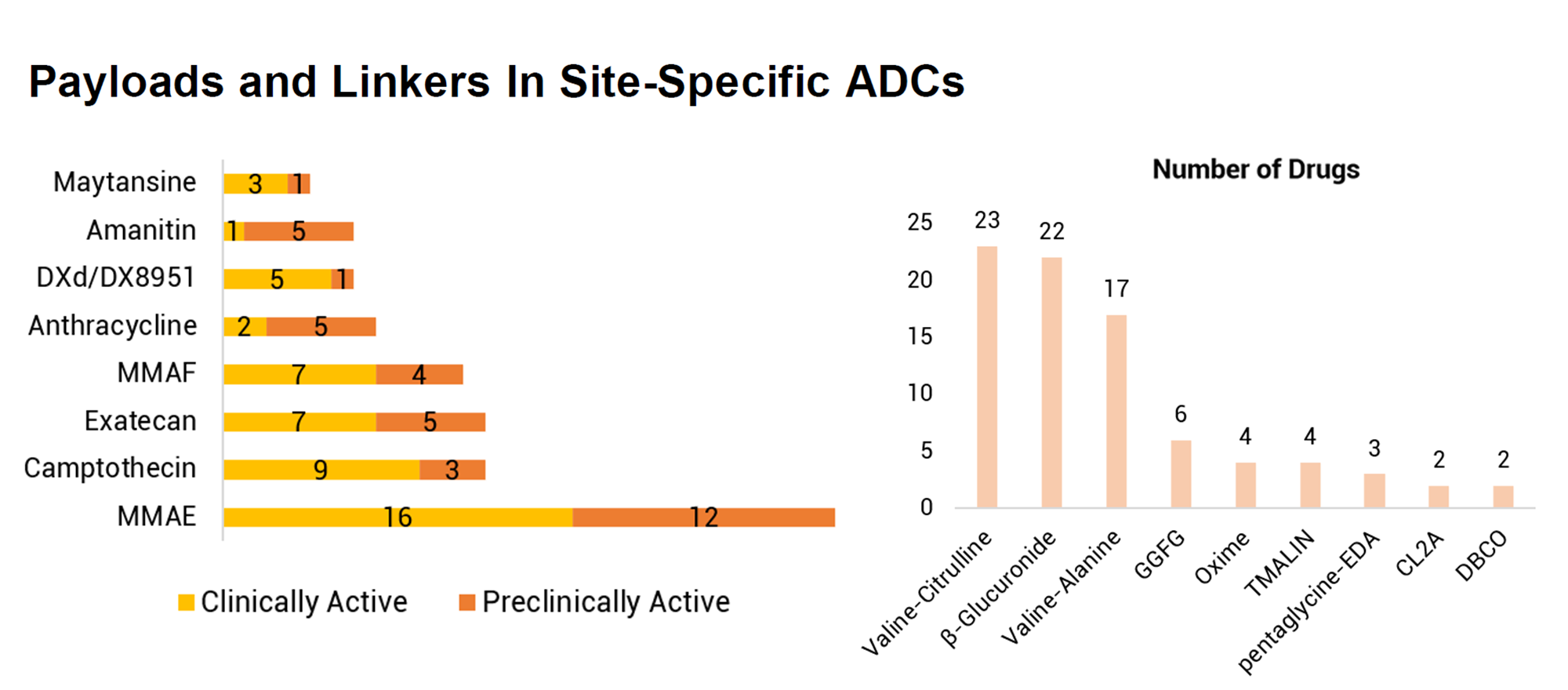
Fig 3 Payloads and Linkers In Site-Specific ADCs
● Consistent with non-site-specific ADCs, the valine-citrulline linker has also dominated site-specific ADCs, with 23 drugs employing this linker. Additionally, β-glucuronide and valine-alanine linkers are commonly used in site-specific ADCs as well (Fig 3).
B. Site-Specific BsADC
● A similar trend was also seen in site-specific bispecific ADCs, with MMAE and Exatecan being the two most studied conjugation payloads, at 5 and 2, respectively (Fig 4).
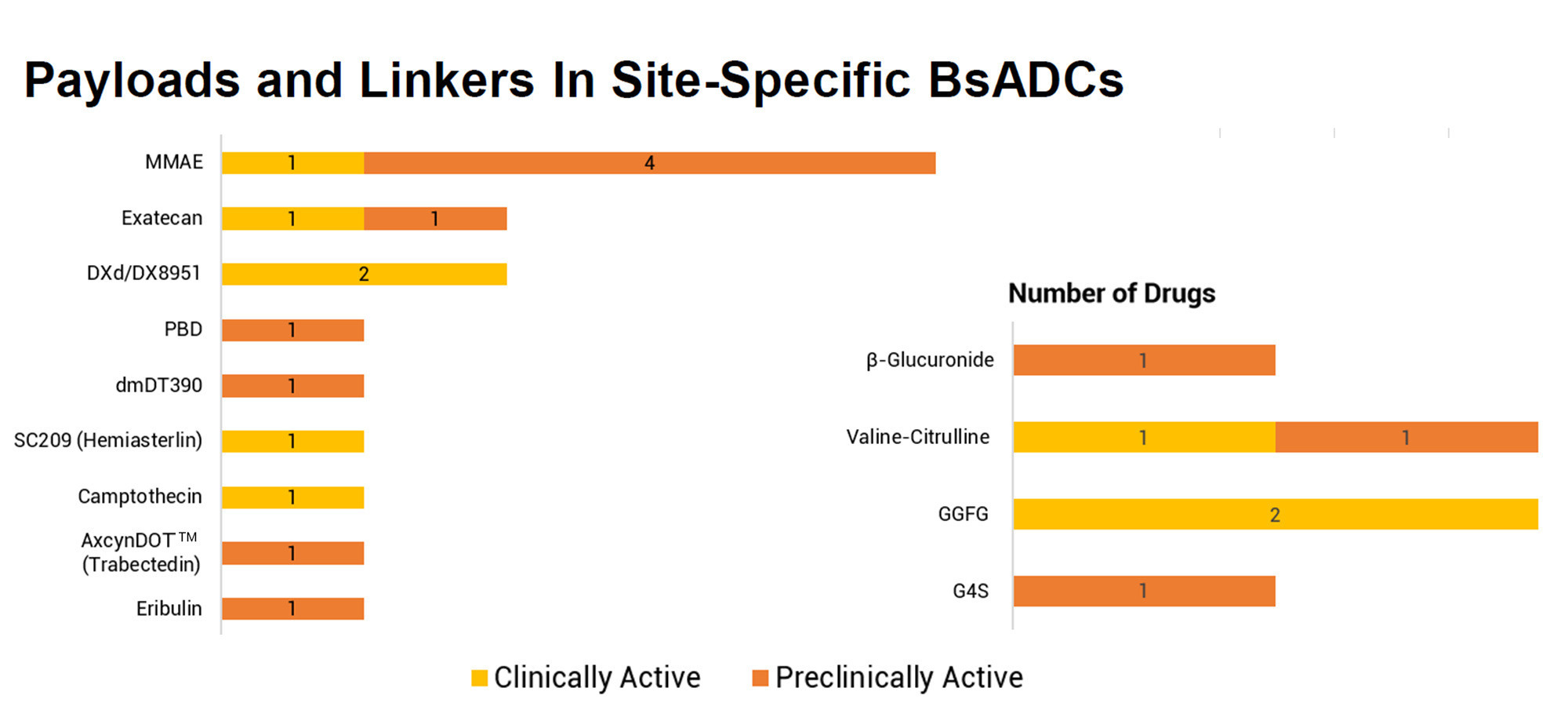
Fig 4 Payloads and Linkers In Site-Specific BsADCs
● While most linker information for bispecific ADCs remains undisclosed, a total of six drugs have revealed their linkers. Currently, drugs with disclosed GGFG and valine-citrulline linkers have progressed to the clinic, further validating the feasibility of these linkers in the development of bispecific ADCs (Fig 4).
3. Innovation in Site-Specific Conjugation: Proprietary Platforms and Industry Integration
Driven by the rapid advancement of site-specific conjugation, more and more companies are developing proprietary platforms to accelerate ADC innovation (Fig 5). ConjuAllTM developed by LigaChem Biosciences Inc is leading the site-specific conjugation development, with a total of 43 drugs adopting their conjugation technology, which incorporates engineered antibodies and enzyme-catalyzed modification steps via its proprietary β-glucuronide linker. In their recent Q1 2025 corporate report, LigaChem Biosciences Inc is optimizing the next generation of β-Glucuronide linker to adapt to higher DAR and wider payload options, such as degraders and small molecules. Another common technology platform is GlycoConnectTM, which utilizes enzymatic remodelling and metal-free click chemistry to replace the glycan with a cytotoxic payload.
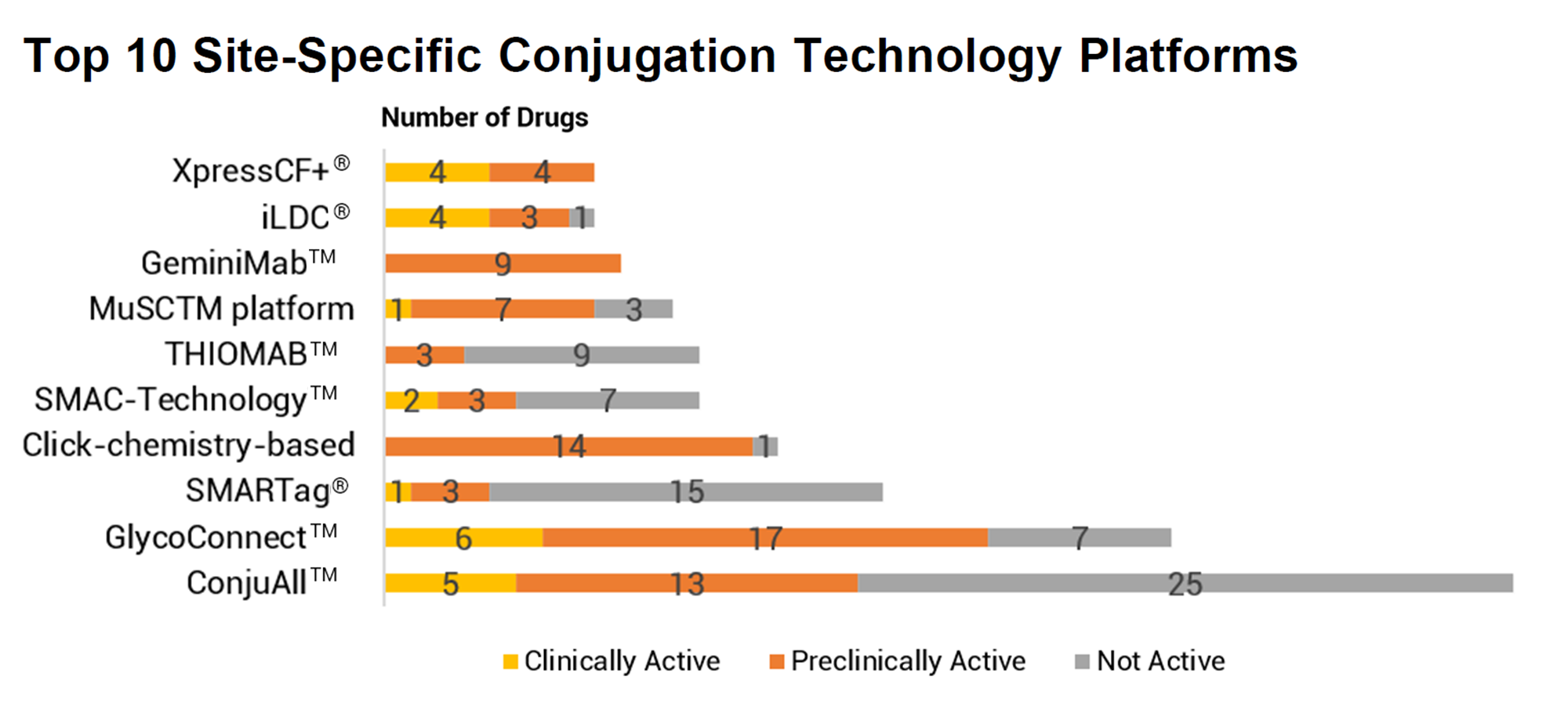
Fig 5 Top 10 Site-Specific Conjugation Technology Platforms
Most top drug developers have developed their proprietary technology platforms and out-license them to other developers. For example, Heidelberg Pharma’s THIOMAB® platform technology and GeneQuantum Healthcare’s iLDC® and iGDC®. Alternatively, big pharma acquires small companies for their technology platforms.
● In 2020, Boehringer Ingelheim gained access to an innovative and unique SMAC-Technology® platform by acquiring NBE-Therapeutics.
● In 2023, Lonza acquired Synaffix to strengthen and expand its ADC service offering with the utilization of Synaffix’s GlycoConnect® conjugation technology platform.
Overall, the rise of site-specific conjugation technologies is driving transformative innovation in ADC development, shifting industry competition from individual product development to platform-based strategies. Through technology licensing and strategic acquisitions, companies are accelerating both innovation and commercialization. As ADCs expand into a wider range of conjugated drug types, site-specific technologies are propelling drug development toward more precise and multifaceted innovations, unlocking new opportunities across the industry.
All data sourced from the Beacon database.
ChemExpress offers comprehensive end-to-end ADC CDMO services for both pharmaceutical and biotech clients. We specialize in Antibody, ADC payload-linker, ADC bioconjugation, ADC drug substance and ADC drug product, providing full support from R&D to commercialization. This seamless integration of ADC drug development ensures complete coverage while minimizing management and switching costs. Our conjugation technology platforms encompass non-site-specific conjugation, site-specific conjugation, N-Glycan conjugation, and enzyme conjugation, offering diverse and flexible solutions.
As ADC technology rapidly evolves, we invite you to explore how site-specific conjugation can drive your next breakthrough.